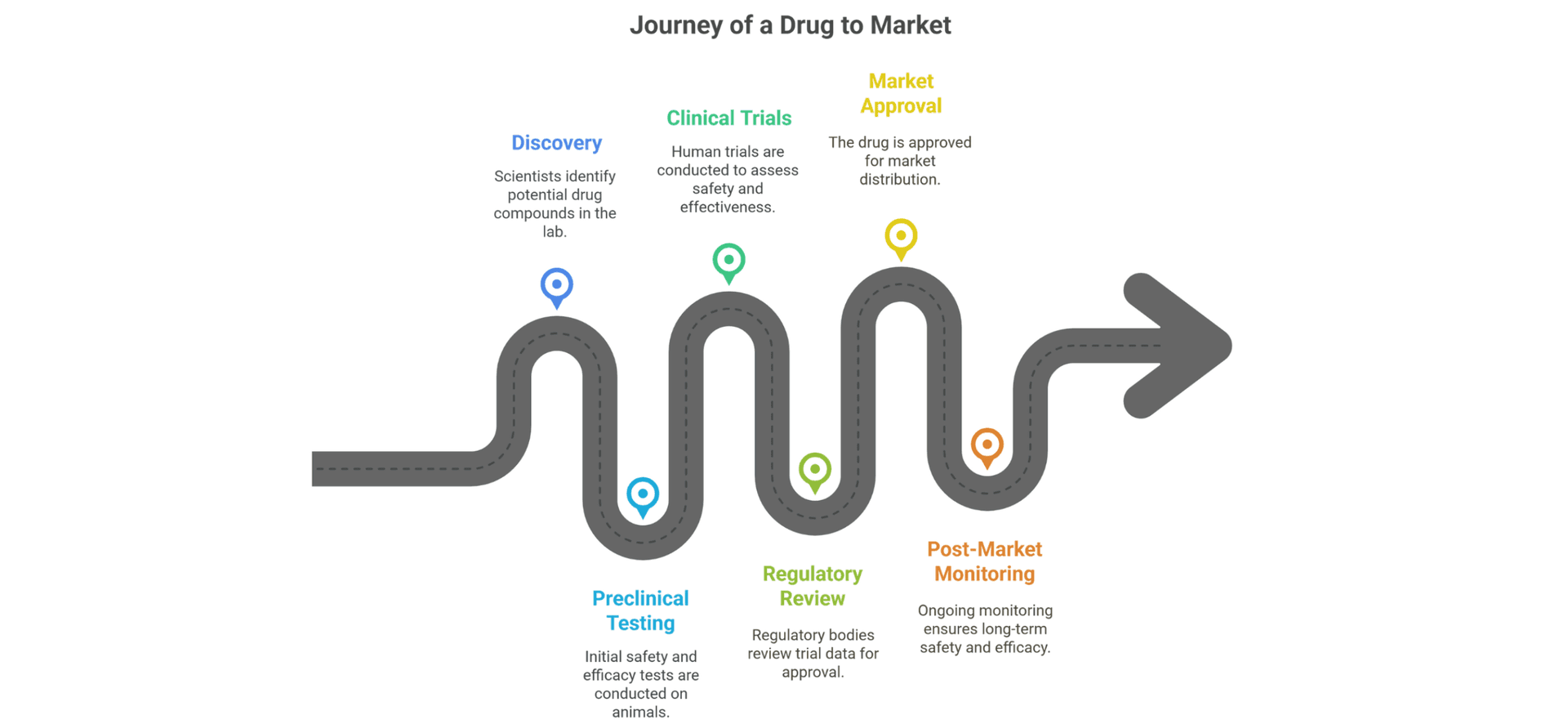
Getting a drug from a smart scientist's idea to your medicine cabinet is quite an adventure. This journey can take 10–15 years and cost, on average, $2.3 billion for just one drug! Behind every pill or shot you take, there's a complex process with loads of tests, trials, and lots of rules to make sure it's OK for you.
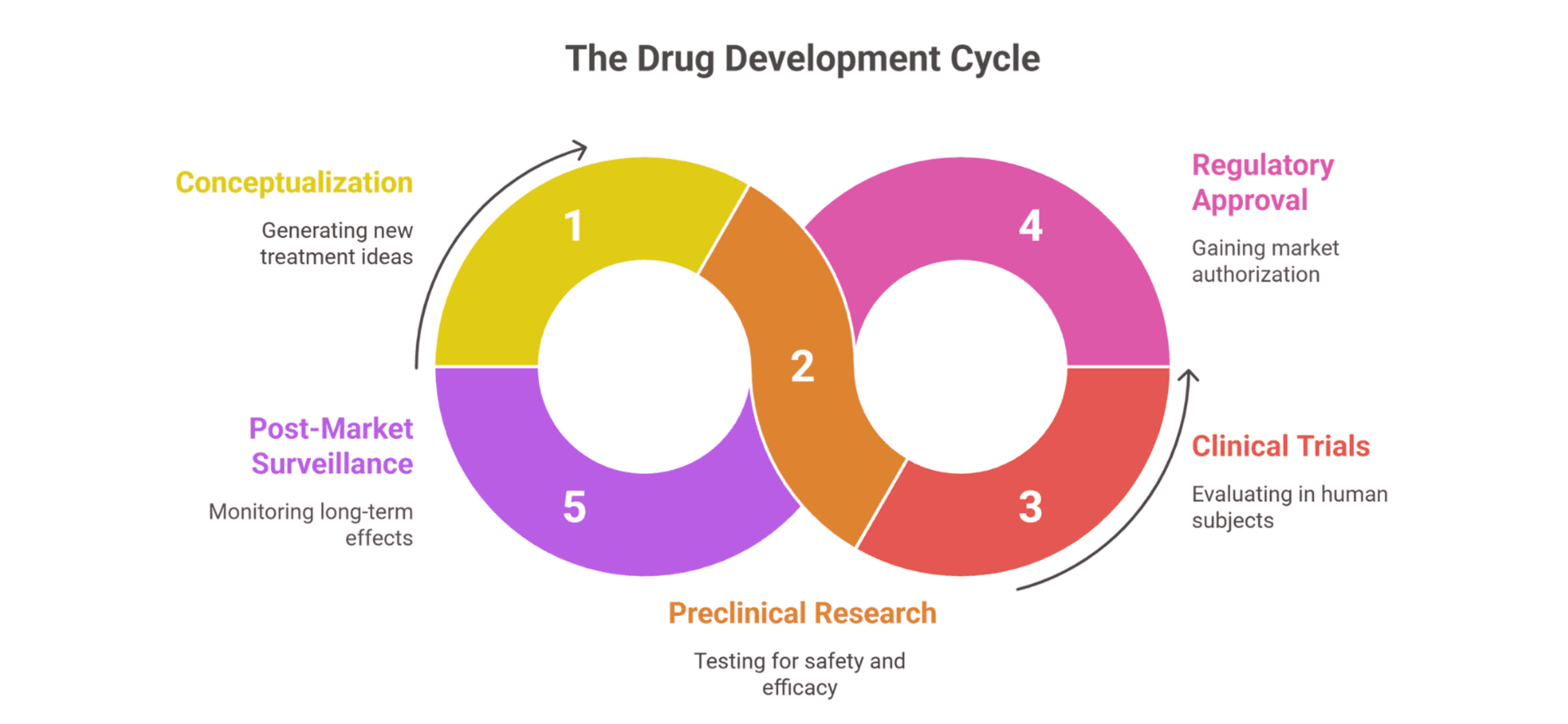
This complex journey unfolds across five critical stages—from laboratory discovery to years of monitoring after a drug reaches the market. Along the way, compounds which seems to be great- face tons of problems. Only a few make it through the tough path to get the green light. In this post, we’ll go step by step, revealing how scientific innovation, regulatory oversight, and clinical testing work together to bring lifesaving and life-enhancing medications to patients worldwide.
1. Understanding Drug Discovery & Development
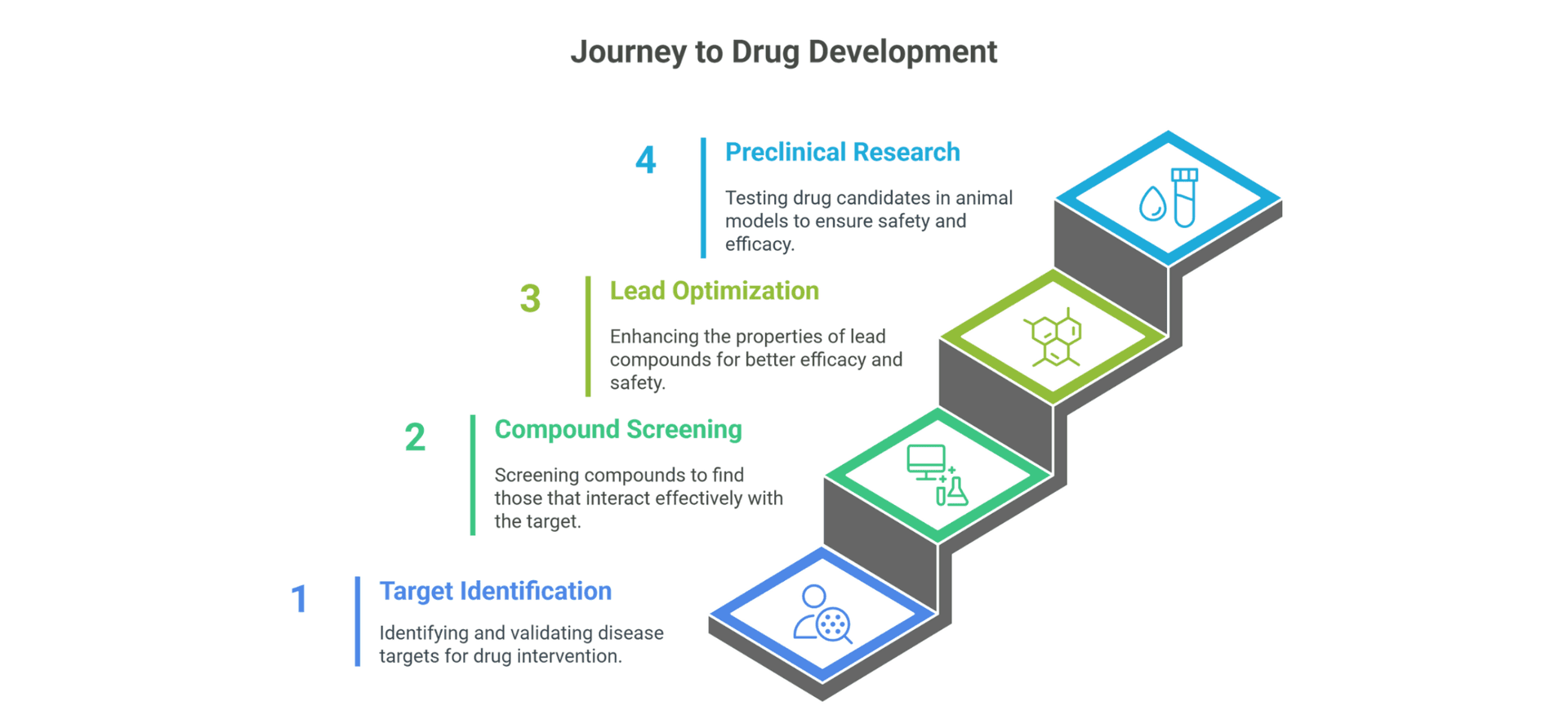
The tale of making a new drug kicks off by figuring out what Disease / Condition we are trying to treat / address. Scientists use lots of ways, like looking at genes and chemical processes, studying how diseases spread in groups of people, checking out in patients to find good targets areas to be focused for new medicine development.
A. Compound Screening & Lead Development
Once a target is validated, it's time to find chemicals that play well with it. This part is called “HIT- DISCOVERY”. Several methods are employed:
B. Factors Influencing Early Development
The lead optimization phase focuses on enhancing the potency and selectivity of candidate molecules while ensuring favourable pharmacokinetic properties. Key factors influencing this stage include:
2.Preclinical Research: Ensuring Safety Before Human Trials
Now that we've explored the foundational stages of drug discovery, let's examine the critical preclinical research phase where safety is rigorously evaluated before human trials begin. In Vitro & In Vivo Testing.
FDA Guidelines and the Modernization Act 2.0
The FDA provides comprehensive guidelines for preclinical testing, including the ICH S6 (R1) framework for biotechnology-derived pharmaceuticals. This guidance, effective since 1998 and updated in 2011, covers critical areas such as species selection, pharmacokinetics, and toxicology assessments for products generated from characterized cells.
Toxicity Assessments & Safety Profiles
Toxicity evaluation checks what a drug does to different body systems, setting safe boundaries. For biotech drugs, these assessments follow a detailed steps from ICH guidelines, focusing on both acute and long-term effects to build comprehensive safety profiles before advancing to human clinical trials.
3.Clinical Trials: Testing in Humans
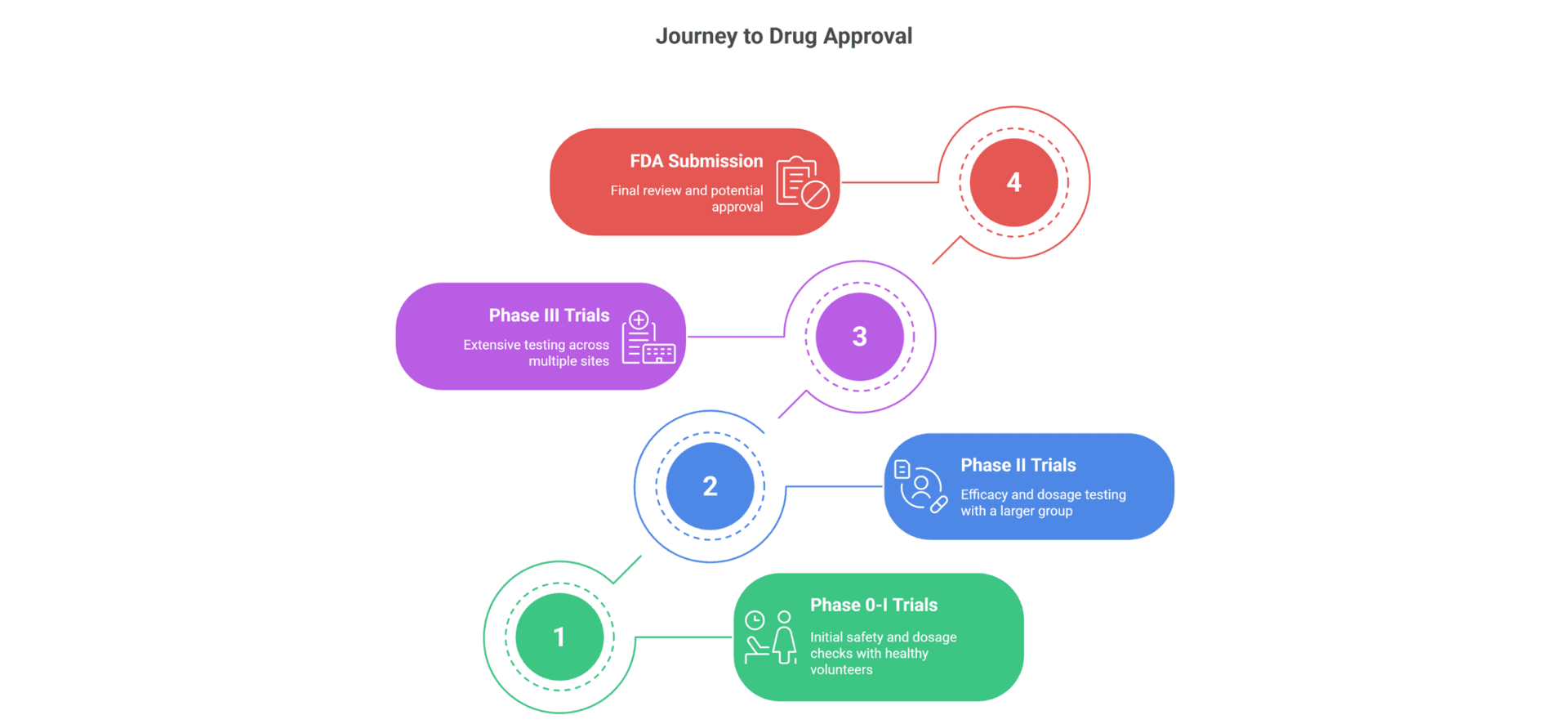
So, we’ve looked at the preclinical stage, right? That’s where drugs are checked out in labs and on animals. But now comes the big part-time testing on people! Clinical trials show if a drug is safe and works well in folks who need it.
Phase 0-I: First Check and Safety Study
Phase II: Does It Work & What’s the Dose?
Here, Phase II gets bigger—100 to 300 people, and it can take a few months to a couple of years. The main goal? See if the drug works for certain illnesses and find the right dose and how often to give it. They mix things up, picking up people randomly and not telling anyone who gets what. This keeps the test fair. With more people, they get really good info on any side effects. It's a big deal in drug making, but only about 33% make it to Phase III.
Phase III: Big Test for Sure Results
Phase III trials involve hundreds to thousands of patients across multiple clinical sites, representing the most extensive human testing before approval. These randomized, blinded studies comprehensively assess safety and efficacy compared to existing treatments. This part is super expensive and takes years, but it’s important because if all goes well, the company has good data to show how their drug is better than old stuff, ready for labelling if allowed. But just 25-30% of drugs make it through these phases and head to the FDA submission.
4. Success Rates and Time Spent
Making new medicines means losing lots of trial and errors, especially at Phase II—it’s tough! From start to finish, taking a drug from labs to store shelves takes about 12-18 years! trials themselves eat up a few years...
5. Regulatory Review & Market Approval
Okay. So, once the Drugs get through the clinical trials, it's time for the crucial Regulatory review. Once clinical trials wrap up, pharmaceutical companies must submit comprehensive data to the FDA through a New Drug Application (NDA). The FDA's Centre for Drug Evaluation and Research (CDER) employs a multidisciplinary team to evaluate the drug's benefits versus risks before approval.
A. FDA Submission Process
The New Drug Application (NDA)—that's the official paper; Company sends to ask the FDA for permission to sell a new drug in the U.S. market. The application must include all research data showing the drug's safety and effectiveness. CDER scientists thoroughly review this information to determine if the drug's benefits outweigh its known risks for the intended population and use.
B. Expedited Review Options
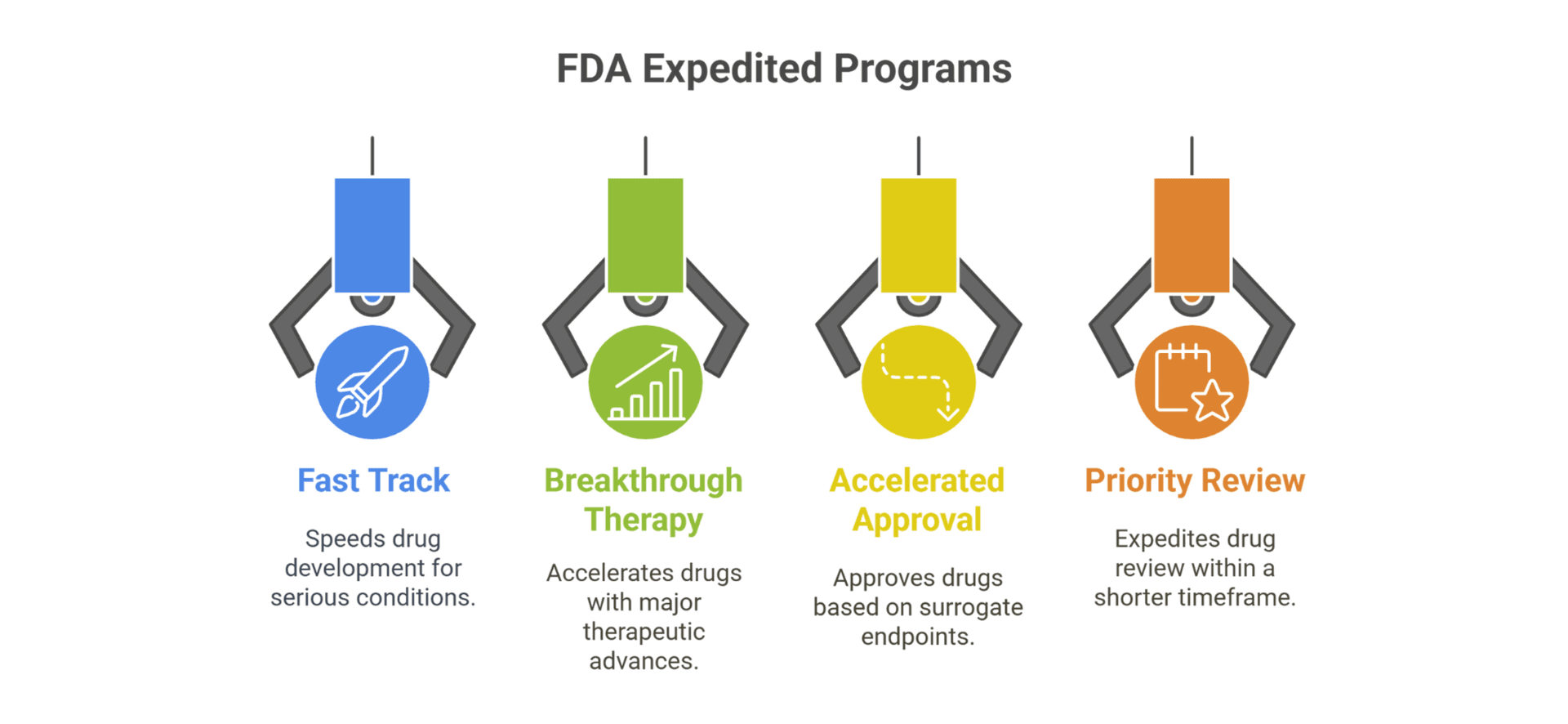
The FDA offers several pathways to speed up the development and review of drugs addressing serious conditions. These include:
C. Manufacturing Requirements
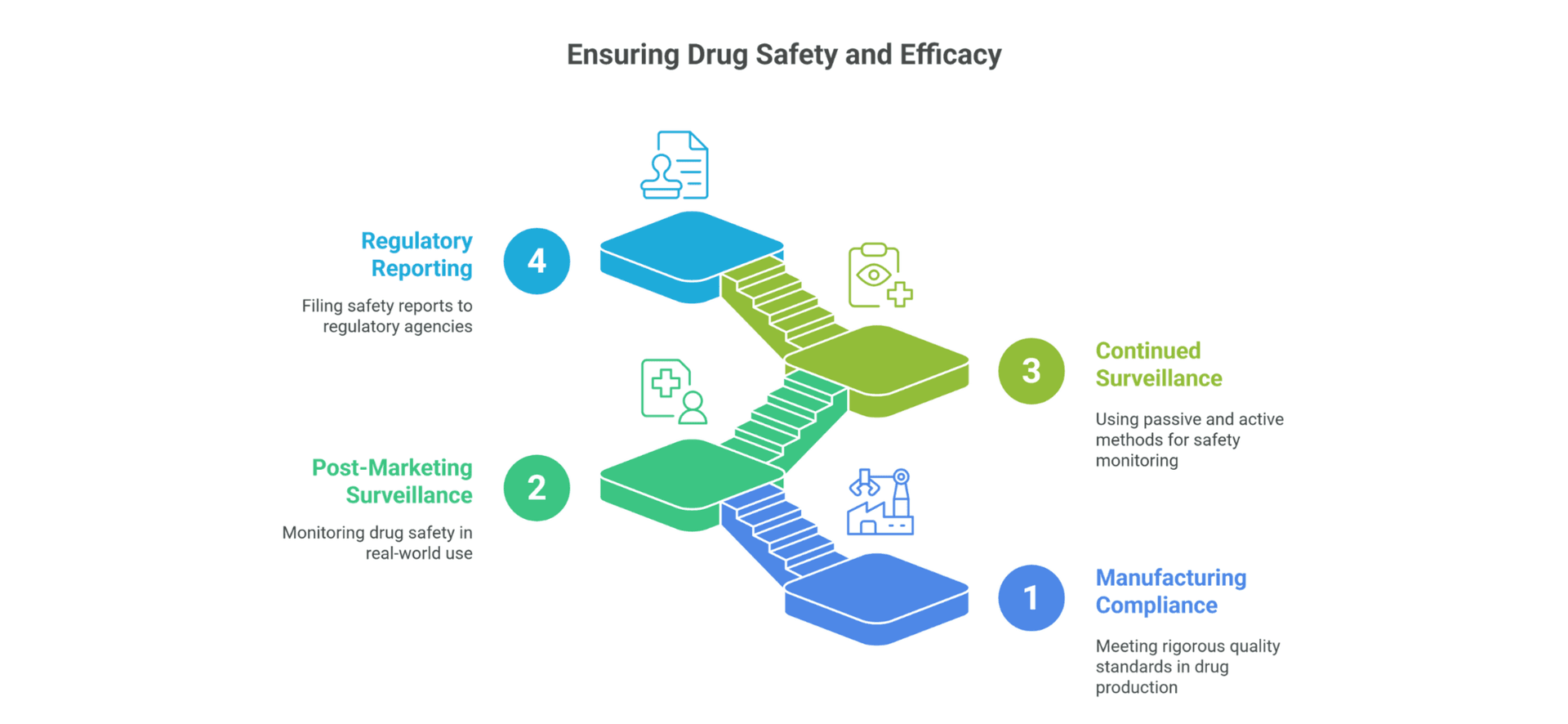
The F.D.A. mandates that manufacturing facilities comply with rigorous quality standards before it approves a drug. Companies must show that they can make the drug with consistent quality controls. It includes ensuring the manufacturing, testing procedures and facility adhere to regulation to ensure that every batch is safe and effective.
6. Post-Marketing Surveillance
The negotiated review has completed regulatory review of a drug showing its safety and efficacy. This stage keeps tabs on drugs in use on a day-to-day basis in settings and in doses far removed from the small patient pools in clinical trials. Pharmaceutical companies, health professionals and authorities work together to continuously monitor drug safety for the protection of the public.
A. Continued Surveillance Techniques for Monitoring Safety
Pharmacovigilance uses passive and active methods for monitoring. Passive surveillance depends on voluntary reporting by health care practitioners and consumers who suspect an adverse event. Active surveillance is structured data collection via post-approval studies and specific registries to follow drug use in a variety of patient populations for long periods.
B. Regulatory Reporting
Pharmaceutical companies are required to routinely file safety reports with agencies like the F.D.A. These publications aggregate adverse event information, analyse emerging trends, and assess potential risks. Regulatory agencies offer recommendations on reporting time intervals and criteria on how to distinguish between a treatment-emergent medical event and background (i.e., a medical event that existed prior to treatment and does not qualify as an AE). These criteria serve to achieve consistency in safety monitoring across all licensed drugs.
7. Pharmaco-Technology Challenges
Now that we looked at the post-market surveillance, let’s look at some of the major obstacles for getting a drug onto the market.
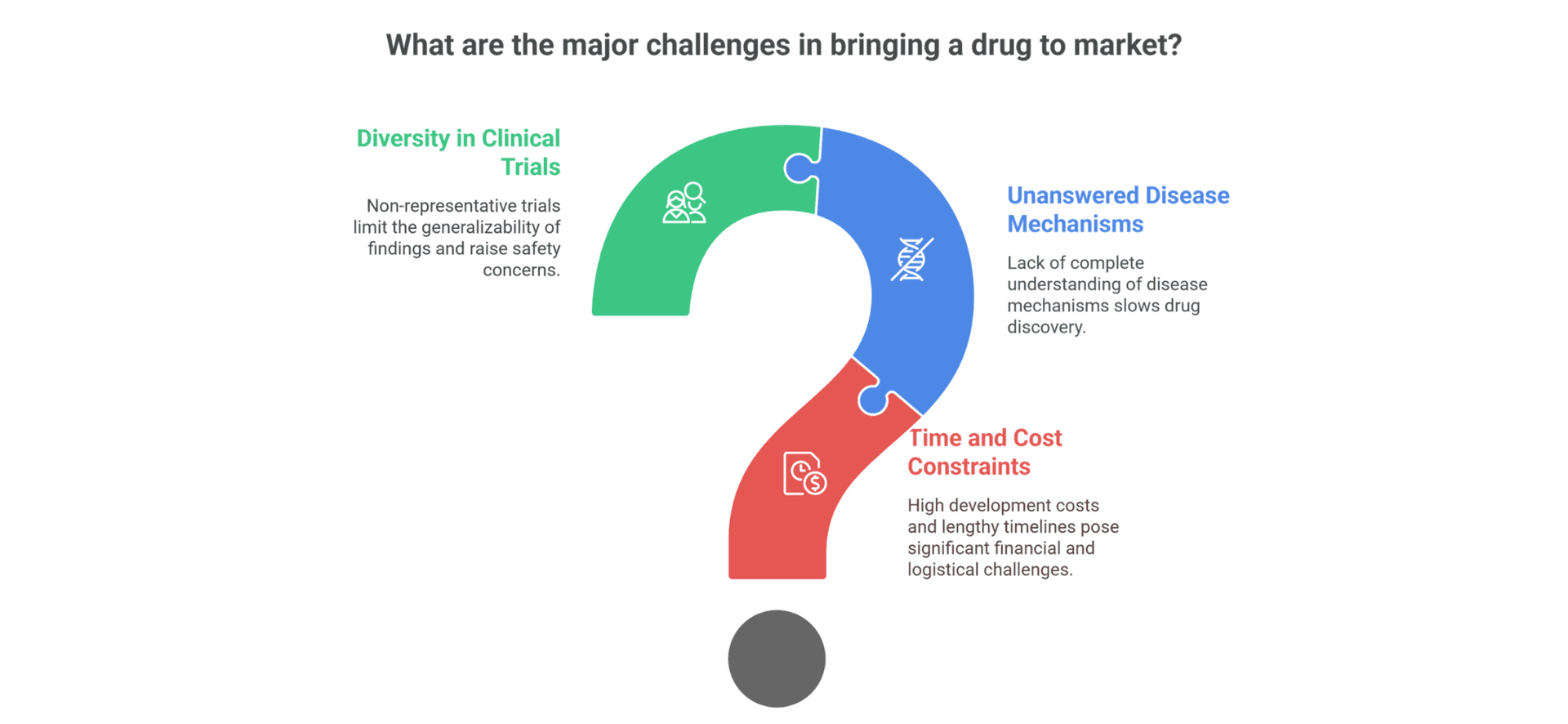
A. Time and Cost Constraints
The development of any drug by the pharmaceutical industry is also hugely expensive, one drug costs $1 billion to $2 billion to bring to market. The industry spent just under $83 billion on R&D in 2019, part of a tenfold increase since the 1980s. Timelines for development span multiple years, and there is a need to get these huge investments back.
B. Unanswered Questions in Mechanisms of Disease
Drug discovery is largely based on an understanding of disease mechanisms. Even though computer aided design and structure activity relationships have developed, most often lack of complete knowledge slows its development. The shift toward specialty drugs and biologics for complex conditions further highlights these challenges.
C. Challenges of Diversity in Clinical Trials
Trials are often not representative, limiting the generalizability of findings across populations. This limitation can result in safety concerns post drug approval if drugs are used on a wider patient population. The sector is increasingly being forced into ensuring the trial participants are more representative of real patients.
8. Drug Reaching the Market:
The Final Hurdles: FDA Approval Process
A. Market Launch and Distribution
Once approved, companies don't just kick back. They're scrambling too:
- Scale up manufacturing.
- Create marketing materials.
- Train sales teams.
- Establish distribution networks.
B. Post-Marketing Surveillance
The work doesn't stop after launch. Drug companies must continue monitoring for:
- Rare side effects that weren't caught in clinical trials.
- How the drug performs in real-world settings.
- Unexpected drug interactions.
Conclusion
The journey of a drug from concept to consumer is a remarkable from dreaming up new treatments, testing them out, getting them approved, to watching them post-market—it’s all about making sure they’re safe and work well. This long and pricey process takes on average 10- 15 years and costs around $2.3 billion per Drug.